Why is my face red?
Why is my face red?
Facial redness can occur for several reasons. Sometimes the redness is temporary, in the form of a flush. In other instances the redness can be permanent. Redness can be a result of inflammation or occur by itself.
A dermatologist can help you understand the causes of your facial redness and suggest ways in which to control redness.
Here we explore some of the common causes of redness.
Dermatitis
Dermatitis is another word for eczema. Redness is a common complaint in those with eczema. There may be dry skin, itch and pigmentation as well. Sometimes the redness is in patches, but at other times the redness can cover the whole face.
Seborrhoeic dermatitis can affect the forehead, eyebrows and smile lines. Atopic dermatitis can affect any part of the face.
Allergies
A red face can be a sign of allergies. Sometimes there is swelling as well. Allergic reactions can occur to everyday products like fragrances and skin care products like make-up and serums. Sometimes the sun can trigger an allergic reaction and cause a red face. Your dermatologist will be able to advise on getting specialist allergy tests if they think you may have a facial allergy.
Rosacea
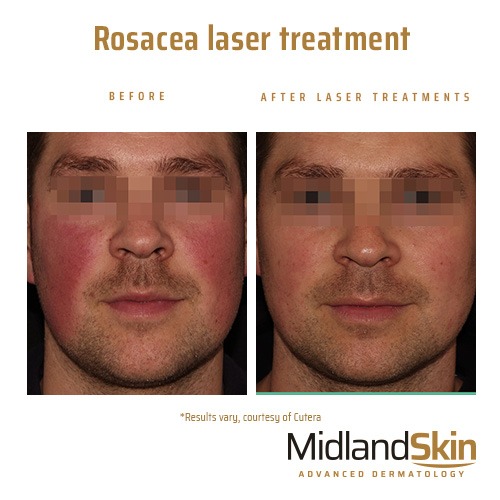
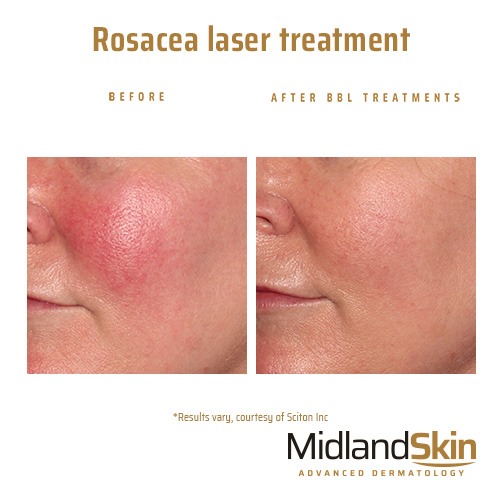
Rosacea is probably the most common cause of facial redness, flushing and thread veins. However, the exact reason why rosacea causes redness is not known. We treat the redness of rosacea successfully with lasers, Broadband light and laser genesis.
Acne
Acne causes red spots. When the spots settle, they can leave a red blemish. This is known as post-inflammatory erythema. Lasers are very good at reducing this sort of redness.
Genetics
Some families have a bit more colour in their skin tone than others. This is not necessarily a disorder. Broadband light and laser treatment can help control this.
Physiological redness
It’s normal to be red when you are very hot or anxious or after having a few glasses of an alcoholic beverage. This is known as physiological flushing. This is the body’s normal way of reacting to changes in temperature or when a vasodilating substance like alcohol is ingested.
Sun damage
Long term sun exposure can break down collagen, which causes thread veins and redness.
Steroid withdrawal
A few individuals who have used steroid creams on the face for prolonged periods can find that their face becomes red and flushes when they try to stop treatment. Paradoxically, using more steroids helps temporarily control the flushing and redness. If you have steroid withdrawal, you should seek treatment from a dermatologist sooner rather than later.
Hormonal imbalances
A red face can be a sign of hormonal imbalances. The most common hormonal cause of flushing is probably menopause. Here, a woman becomes deficient in oestrogen, and the blood vessels subsequently dilate without warning. However, other hormonal imbalances can also cause flushing, such as thyroid hormone disturbance and adrenal hormone disturbance. Therefore, facial redness with flushing and palpitations should be investigated by your doctor.
Anxiety
Anxiety is a common cause of facial redness. However, managing anxiety can help control physical symptoms. Anxiety management can be done with a psychologist, medication, or often both.
Blood abnormalities
It is important to note that facial redness and flushing can rarely be a sign of blood abnormalities. A full blood count can show if there are too many red blood cells causing this.
Medications
Certain medications can cause facial redness and flushing. These include medicines used for blood pressure, pain control, angina control and even vitamin B3, which is used to prevent skin cancer and can cause flushing.
Combinations
Redness can arise from more than one condition being present simultaneously. For example, an individual may have acne, rosacea and seborrhoeic dermatitis altogether.
Summary
There are various causes of a red face. It can be helpful to see a Dermatologist to learn what redness and flushing could be caused by and to identify if more than one cause is present.