Facial skin problems
Skin problems frequently occur on the face. They can cause a lot of distress because they are so visible. Here are some common causes of facial skin problems in our clinic.
Acne
One of the most common facial skin concerns is acne. Acne is not just a teenage problem and occurs in many adults in their 20’s, 30’s and 40’s. Acne can break out for no apparent reason, which can be very frustrating. Other causes of breakouts include stress, a poor diet, lack of sleep or the menstrual cycle. Acne is extremely distressing as it can cause social problems, even when it is mild. People with acne are self-conscious and often lose confidence. Acne can also lead to scars on the skin. It is important that acne is treated well, as this can change someone’s quality of life.
Luckily there are some very good treatments available for acne. You might start with creams that contain active ingredients such as Azelaic acid, Retinoids, Benzoyl Peroxide or Topical Antibiotics. When creams alone do not control acne, then tablets can be taken. Examples include antibiotic tablets, Isotretinoin (Roaccutane or Accutane) and Spironolactone for hormonal acne.
Good skin care is also very important, and our team can help to advise you on the optimum skin care products to use. Regarding skin care for acne, we firmly believe that less is more and using fewer high-quality products is superior to layering many different components.
Acne scars
One unwanted consequence of acne is the scars that can cause pits, holes and dips in the skin. Treatments include subcision, laser treatments, Tixel and fillers. Acne scars can cause hyperpigmentation which can be treated with creams.
Rosacea and redness
Another common concern is redness and flushing. Sometimes redness is part of the complexion in someone’s family, and at other times it can occur from Rosacea or other causes of inflammation. It is important to diagnose the cause of redness and have a good skincare regime. Sometimes laser treatments are required, as are prescription creams and tablets.
Some lifestyle habits can also trigger redness and flushing, such as drinking coffee and alcohol, eating spicy foods, and spending too much time in the sun.
Rosacea can also cause pustules and spots – which can look like acne. Pustules in rosacea can be treated with creams and tablets.
Eczema and Dermatitis
Eczema is inflammation of the skin. Dermatitis is another word for eczema. In some cases, eczema is mild and can cause dry skin. In other cases, there is soreness, redness, weeping and swelling. Eczema can occur around the eyes, the lips or anywhere else.
Sometimes a good skin care regime is enough to control eczema. In other instances, medicated creams are required. These may include steroids and non-steroidal agents. There are some for whom eczema is very severe and requires oral medication.
Allergies can cause eczema on the face. Allergies can be to things that are used on the skin like fragrances, skin care products or make-up.
Seborrhoeic eczema (also known as seborrhoeic dermatitis) is a form of inflammation of the skin that arises in part from a reaction against the natural yeasts on the skin.
Perioral dermatitis is slightly different in that it causes spots like acne, but there can be features of eczema too.
Skin cancers and sun damage
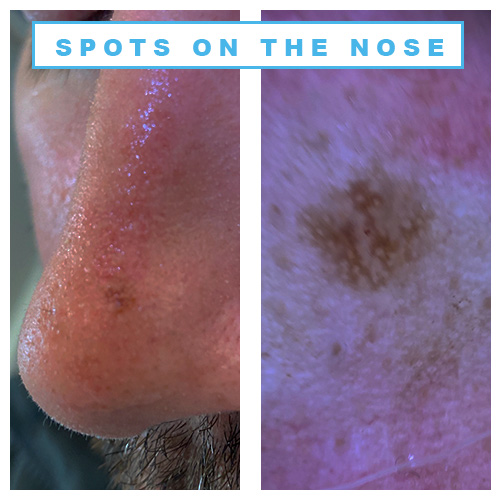
Surprisingly, signs of sun damage are very common on the face. Sun damage can cause early wrinkling and sagging in the skin, thread veins and pigmentation. Sun damage can also cause rashes on the scalp, ears, forehead, nose and face, known as actinic keratosis. Here, the sun causes damage to cells, causing red patches to erupt. These can be treated with a strong cream. Skin cancers may look like red spots that grow, scab and bleed. Sometimes skin cancers are brown and flat.
Irregular pigmentation
One of the leading causes of irregular pigmentation is a condition called melasma.
Melasma occurs more commonly in women but can also occur in men. Sun exposure, hormonal contraception, as well as pregnancy can all make pigmentations worse. Pigmentation can be difficult to cover up with make-up. We offer prescription and non-prescription skin-lightening creams as part of a skincare plan to improve pigmentation. Another forgotten aspect of treating pigmentation is to be meticulous about protecting your skin from sun exposure.
Where can I get advice about a facial rash?
The list above is just a small selection of the conditions that may affect the face and cause facial skin problems. If you are struggling with your skin, you can get advice from:
- Your pharmacist
- Your facialist / therapist
- Your GP
- A dermatologist