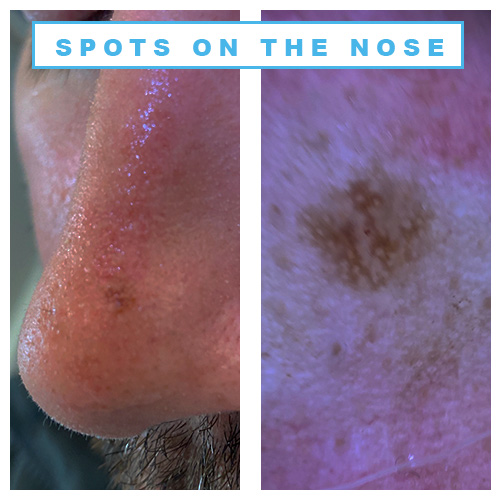
ABCD of moles can help identify melanoma early
Broadly speaking, there are two types of skin cancers – melanoma and non-melanoma skin cancers. Melanoma is a skin cancer that arises from moles. Melanoma is the least common. but the most serious type of skin cancer. Melanoma affects young adults more frequently than other cancers and are the second most common cancer in those aged 15 to 34 years of age.
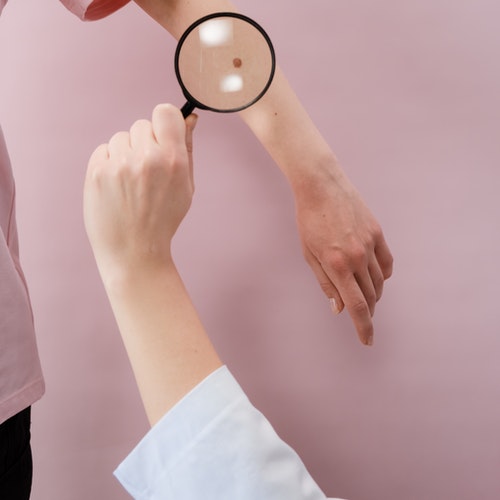
Fortunately, the chance of a cure is high if melanoma is diagnosed and treated early.
Early diagnosis can only occur if individuals who have moles that could be melanoma see their doctors and get their moles checked.
The picture above highlights the ABCD features you should look out for in your moles to help identify moles that could be melanoma.
The ABCD features are:
Asymmetry
Normal moles are often symmetrical in that if you split the mole in half, one half is a mirror image of the other half. Melanomas are asymmetrical, and one half is usually different from the other half.
Border irregularity
Normal moles usually have a smoothly rounded outline that is sharp and easy to see. Melanomas frequently have jagged edges that are not rounded, and sometimes the outline is not sharp, and it becomes difficult to see where the mole ends.
Colour irregularity
Normal moles usually have one even colour. Melanoma usually has multiple shades of brown and can have other colours too, including black, red, and white.
Development and change
This is arguably the most important feature and the one that can help pick up an early melanoma sooner.
A mole growing or changes in shape and colour is probably the most important sort of mole to ask your doctor to check.
Melanomas grow and change over a period of months, whereas normal moles do not change at this rate (and sometimes don’t change at all). Typically, moles that are melanoma first become darker and blotchy, developing several shades of brown and black. They then grow outwards to become wider, and finally, they thicken and become raised. They may or may not bleed or itch at any stage.